Why Universities Need a Modern Examination System
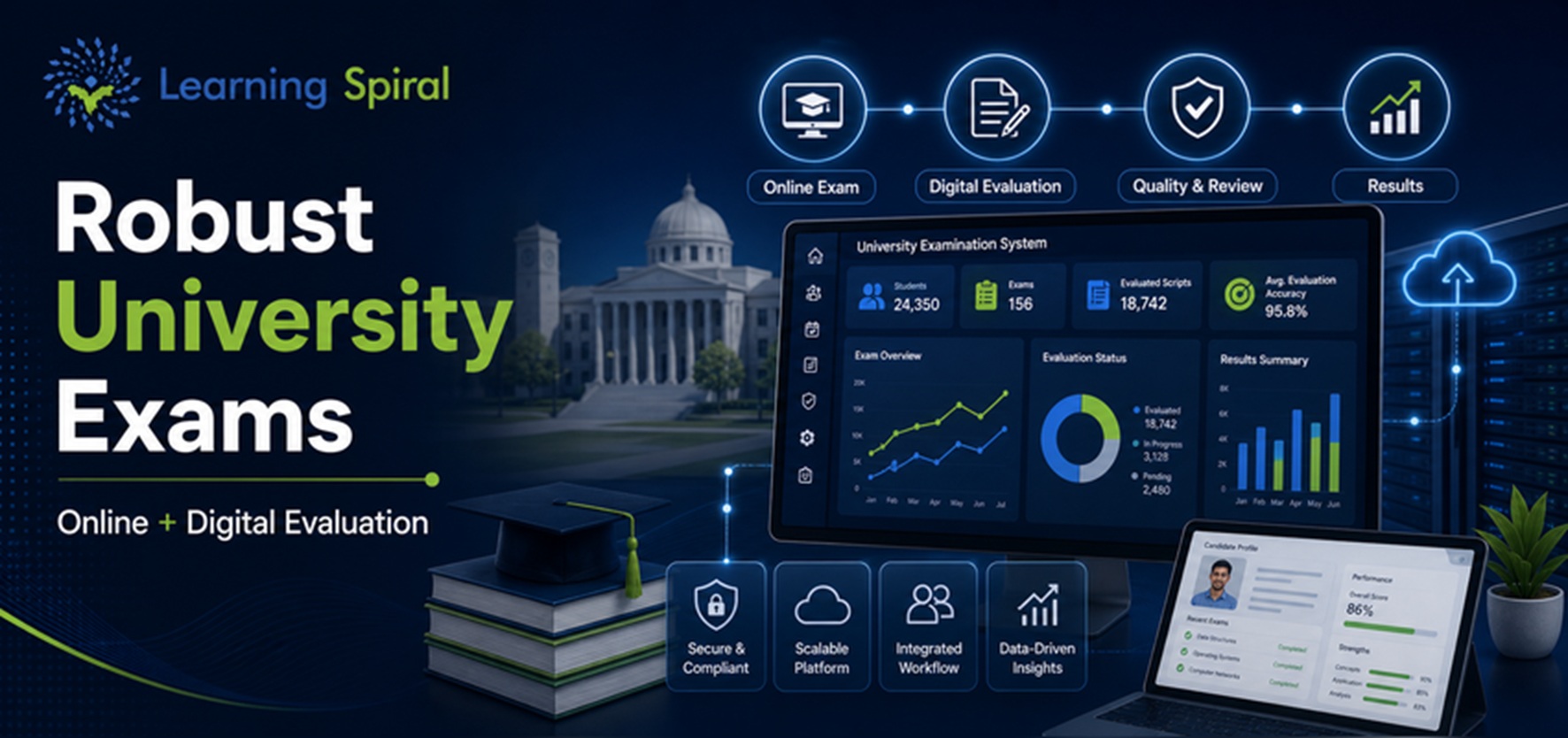
Traditional examination processes—paper-based question papers, manual answer sheet handling, and delayed result declarations—are increasingly incompatible with the speed and scale that today’s higher education institutions demand. A well-designed University Examination System brings every stage of the assessment lifecycle, from question paper creation to final result publication, onto a single, secure digital platform.
For universities, education boards, and examination authorities managing thousands of candidates across multiple centers, this shift isn’t just about convenience. It’s about accuracy, accountability, and student trust.
Core Benefits of Digitizing Examination Workflows
1. Streamlined Pre and Post Examination Processing A digital system automates repetitive administrative tasks across both Pre Examination Processing (registration, hall ticket generation, seating plans) and Post Examination Processing (result compilation, transcript generation, grievance handling). This reduces manual workload for exam departments while minimizing human error.
2. Centralized Question Bank Management With robust Question Bank Management, institutions can categorize, tag, and reuse questions by difficulty, subject, and learning outcome. This ensures paper-setting is faster, more consistent, and less prone to duplication or leaks—a critical concern for examination authorities.
3. Flexible Online Exam Solutions An Online Exam Solution allows universities to conduct assessments remotely or on-campus with built-in proctoring, randomized question sets, and real-time monitoring. This flexibility supports hybrid learning models and large-scale entrance or competency tests without compromising exam integrity.
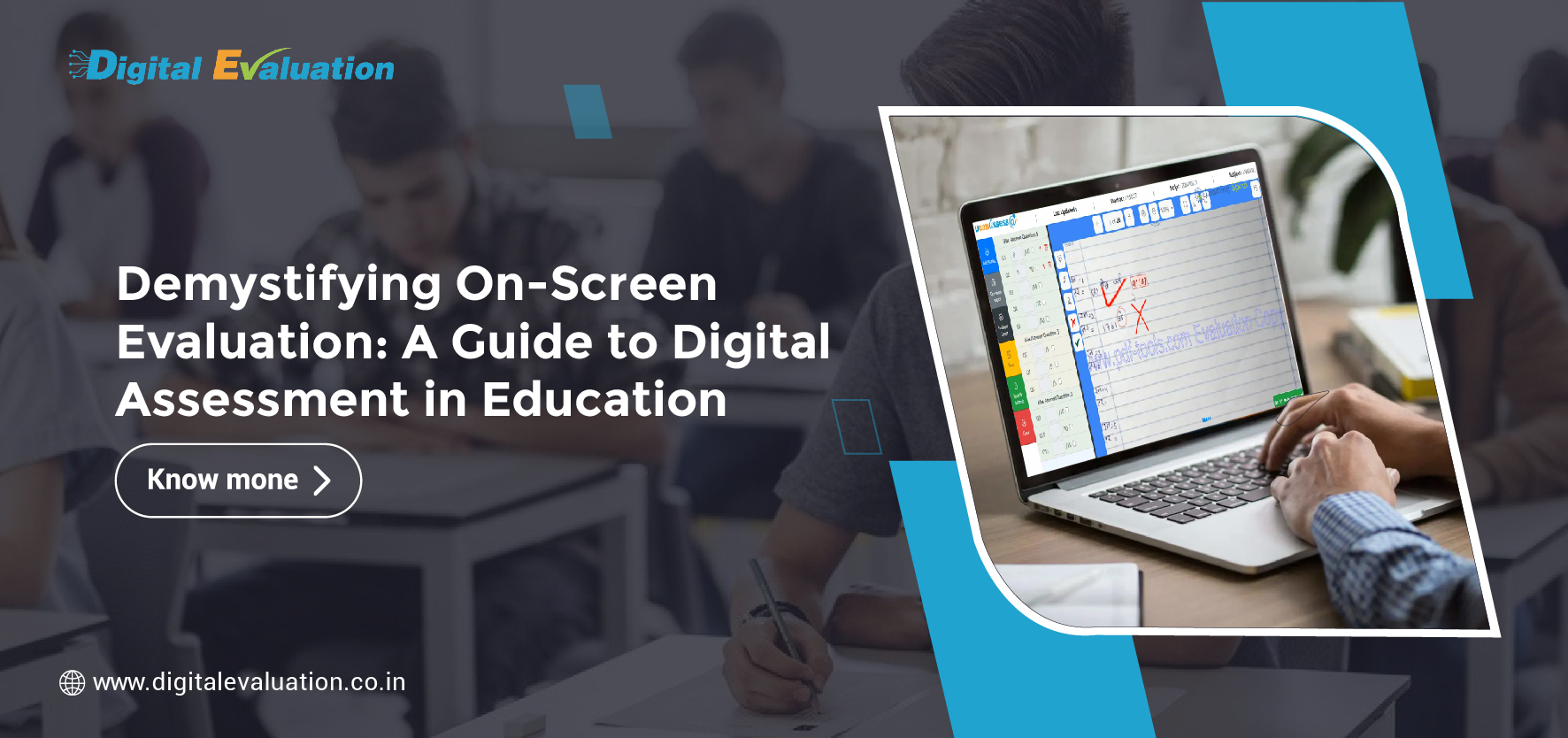
4. Faster, More Accurate Evaluation Perhaps the most transformative benefit lies in Digital Evaluation. Instead of examiners manually checking stacks of physical booklets, On-Screen Marking systems allow evaluators to assess digitized answer scripts on a computer interface—complete with mark allocation tools, moderation workflows, and audit trails.
Key advantages of On-Screen Evaluation include:
- Elimination of transportation and storage risks associated with physical answer sheets
- Multiple examiners can evaluate the same script for moderation, improving fairness
- Real-time tracking of evaluation progress and examiner performance
- Faster turnaround from Scanning of Answer Sheets to result declaration
Common Challenges Institutions Face
Despite clear benefits, transitioning to a digital Examination Processing model isn’t without hurdles:
- Change management — Faculty and examiners accustomed to paper-based marking need training and support
- Infrastructure readiness — Reliable Answer Booklet Scanning requires quality scanning hardware and network bandwidth
- Data security — Question banks and student data must be protected against breaches and tampering
- Integration complexity — A new Online Examination System must work alongside existing student information and academic systems
Choosing the right technology partner is essential to navigate these challenges smoothly. This is where a platform like Learning Spiral becomes valuable—offering end-to-end solutions that connect question bank creation, online assessment delivery, and on-screen evaluation into one cohesive ecosystem, backed by dedicated implementation support.
Future Trends Shaping University Assessments
Looking ahead, several trends are set to redefine how institutions approach Online Assessment:
- AI-assisted evaluation for objective-type and even descriptive answers, reducing examiner workload
- Analytics dashboards that give administrators insight into performance trends across departments
- Blockchain-backed result verification to prevent certificate fraud
- Adaptive testing that adjusts question difficulty based on candidate responses in real time
Universities that invest in a comprehensive University Management System today will be better positioned to adopt these innovations as they mature, rather than rebuilding their examination infrastructure from scratch.
Getting Started with Digital Transformation
Modernizing examination workflows is a strategic decision that impacts institutional reputation, operational efficiency, and student satisfaction. Whether your priority is a scalable On Screen Marking System, a secure Digital Evaluation System, or a complete overhaul of your assessment pipeline, the right technology foundation makes all the difference.
Ready to transform your examination process? Explore Learning Spiral’s full suite of university examination and evaluation solutions, or request a personalized demo to see how digital evaluation can work for your institution.