
Imagine this: your university has prepared for 10,000 students to access its examination portal. But on the morning of registration or assessment, thousands more attempt to log in simultaneously.
Pages begin loading slowly. Students struggle to download admit cards. Examination departments receive repeated complaints, and administrative teams scramble to keep the process running.
Now comes the important question: Is your University Examination System designed to handle such unexpected pressure, or does it only perform well under normal conditions?
As universities expand their academic programmes, introduce flexible admission pathways and conduct multiple examination cycles, sudden increases in student activity are becoming an important operational challenge.
A modern examination platform must do more than digitise existing processes. It must support growing student volumes while maintaining security, accuracy, accessibility and examination continuity.
Let’s explore seven practical checks that reveal whether your institution is prepared for its next major examination surge.
Why Sudden Student Surges Challenge University Examination Systems
A student surge is not necessarily an increase in total university enrolment. It can also occur when thousands of students access the same examination service within a short period.
Consider the final hour of examination registration, a university-wide admit-card release, a large online entrance examination or the announcement of semester results.
Each event creates concentrated demand.
A traditional examination workflow may struggle with simultaneous logins, database requests, document generation and manual administrative activities.
An integrated University Examination System helps institutions coordinate examination activities with student data, academic schedules, assessment workflows and result management.
However, integration alone is not enough. Universities must also examine how the system performs when demand rises unexpectedly.
1. Can Your Examination Portal Handle Peak Student Traffic?
The first readiness check is straightforward: how many students can access your examination portal simultaneously without experiencing significant delays or failures?
A system that performs efficiently for 1,000 users may behave differently when 10,000 users attempt to register, download documents or submit examinations at the same time.
Universities should conduct realistic load testing before major examination events.
These tests should reproduce peak activities such as student logins, examination form submissions, admit-card downloads and answer submissions.
Administrators should monitor response times, failed requests, database performance and successful submissions under increasing demand.
A reliable Online Examination System should be evaluated for scalability, fault tolerance, security and recovery capabilities.
The important question is not how many students are registered, but how many may need the system at the same moment.
2. Is Your Pre Examination Processing Prepared for Last-Minute Changes?
Unexpected examination demand affects more than the server.
It also creates pressure on student registration, course mapping, examination eligibility, scheduling and admit-card generation.
Imagine hundreds of students changing examination subjects shortly before the registration deadline. If these updates depend on disconnected spreadsheets and manual verification, administrative delays can quickly accumulate.
Effective Pre Examination Processing helps universities maintain accurate student records, manage examination forms and coordinate important academic information before examinations begin.
A well-planned process should support data validation, controlled record updates, efficient document generation and clear exception-handling procedures.
When pre-examination data is accurate and connected, universities can reduce last-minute confusion and prepare more effectively for increased examination activity.
3. Can Your Question Bank Support Multiple Examinations Securely?
Sudden student surges may require universities to conduct additional examination sessions, create alternative question-paper sets or manage assessments across multiple departments.
This places additional demands on question-paper preparation and security.
A structured Question Bank Management solution can help institutions organise questions according to subjects, topics, difficulty levels and examination requirements.
It can also support controlled question access, structured paper preparation and secure question-paper distribution.
For universities conducting large-scale examinations, question-paper security becomes especially important when multiple examination schedules or sessions are involved.
Instead of relying on scattered documents and repetitive manual preparation, examination departments can establish a more organised question-management workflow.
A scalable examination process needs both adequate technical capacity and reliable academic content management.
4. What Happens If an Online Assessment Is Interrupted?
A sudden rise in concurrent students can place pressure on internet connectivity, examination delivery systems and submission services.
But capacity is only one part of examination reliability.
What happens if a candidate temporarily loses connectivity? How are responses saved? What procedures apply if an examination session is interrupted?
Institutions using Online Assessment should evaluate the complete candidate experience, from secure authentication to final response submission.
Depending on the examination platform and institutional rules, important capabilities may include periodic response saving, controlled session recovery, secure access, submission confirmation and technical incident reporting.
Universities should also establish clearly documented contingency procedures before examinations begin.
For example, examination administrators need to know how affected candidates will be identified, how interruptions will be recorded and how authorised decisions about additional time or rescheduling will be implemented.
A reliable Online Exam Solution should be assessed not only by its ability to conduct examinations successfully, but also by how effectively it handles unexpected disruptions.
5. Can Your Answer Booklet Scanning Workflow Handle Higher Volumes?
Not every university examination takes place online.
Many universities continue to conduct handwritten descriptive examinations that generate thousands of physical answer booklets.
When student numbers rise, the volume of answer scripts requiring collection, scanning, indexing and verification also increases.
This makes Answer booklet scanning a critical part of examination readiness.
The Scanning of Answer Sheets must preserve readability, correct page sequencing and accurate association with the appropriate examination records.
Poor image quality, missing pages or incorrect script identification can interrupt the evaluation process and create avoidable delays.
Universities should assess their daily scanning capacity, operator availability, quality-control procedures and arrangements for correcting scanning errors.
A Digital Evaluation System can help organise scanned scripts for secure electronic evaluation, but its effectiveness depends on receiving complete and accurate digital records.
The real objective is not simply scanning more booklets. It is producing more evaluation-ready scripts without compromising quality.
6. Is Your On Screen Evaluation Process Flexible Enough to Expand?
A sudden increase in students often leads to a corresponding increase in answer scripts awaiting evaluation.
Traditional manual marking can become difficult to coordinate when examination departments must distribute larger quantities of physical booklets across multiple evaluators.
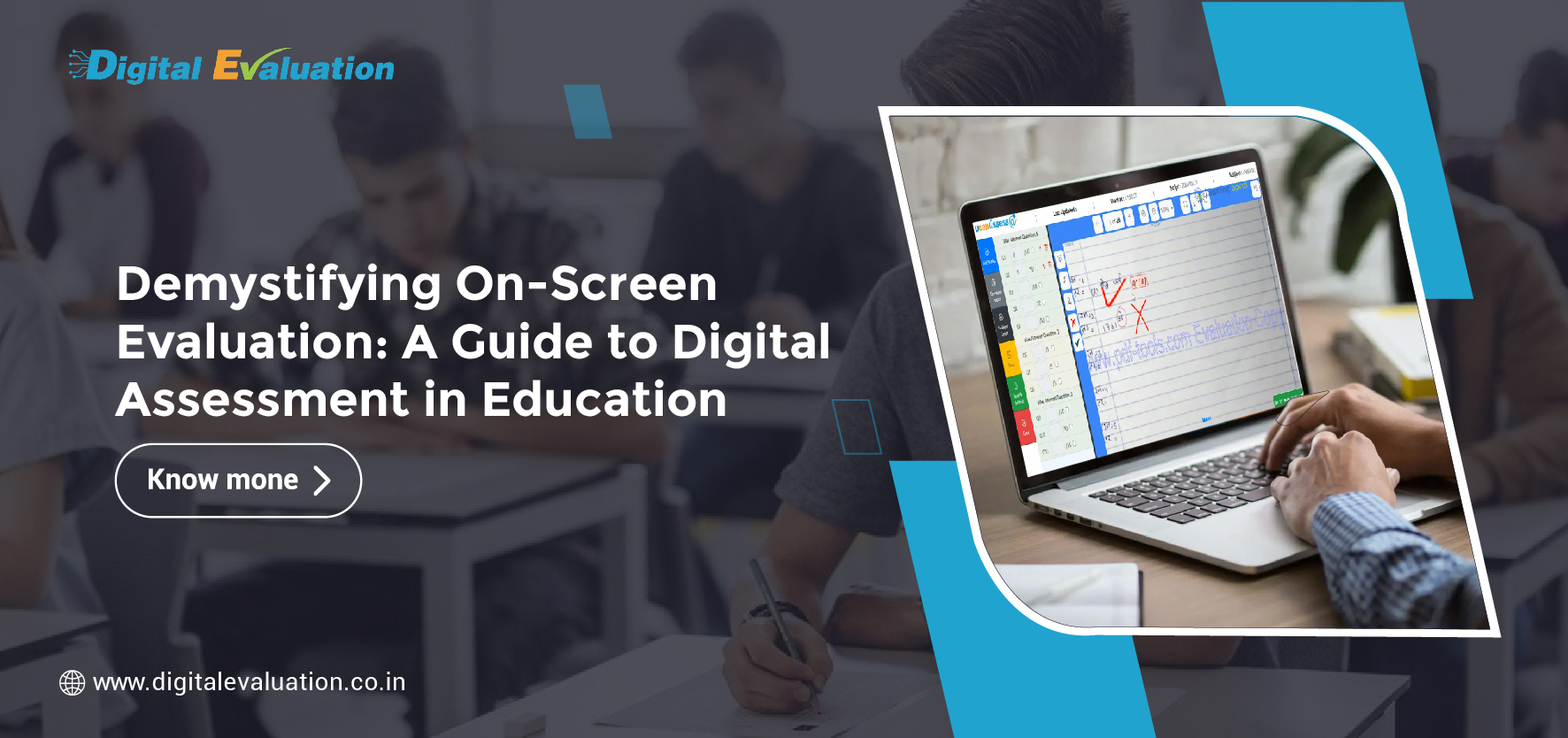
On Screen Evaluation provides an alternative approach.
Instead of transporting physical answer scripts between examination centres and examiners, institutions can make verified digital copies available to authorised evaluators.
A modern On Screen Marking System can support digital script allocation, online marks entry, annotations, evaluator monitoring and structured review processes.
This approach can improve administrative visibility when evaluation workloads increase.
Universities should check whether their On-Screen Evaluation workflow can accommodate additional evaluators, allocate scripts according to institutional rules and track pending evaluation work.
An effective On-Screen Marking process also needs appropriate security controls, examiner training and consistent marking instructions.
Digital Evaluation does not eliminate the need for qualified academic judgement. Instead, it helps institutions organise the activities surrounding that judgement.
When implemented effectively, On Screen Evaluation can reduce dependence on physical script movement and create a more manageable evaluation workflow during peak examination periods.
7. Can Your Post Examination Processing Keep Up With Results?
An examination surge does not end when students submit their answers.
In many institutions, the most demanding stage begins afterward.
Examination departments must compile marks, process moderation decisions, verify results, calculate grades, prepare mark sheets and publish approved outcomes.
This is where Post Examination Processing becomes crucial.
If evaluated marks are stored across disconnected systems, universities may face additional reconciliation work, repeated data entry and delays in result preparation.
An integrated examination workflow can help transfer verified evaluation records into the appropriate result-processing stages while maintaining institutional approval requirements.
Universities should assess how effectively their systems manage marks validation, exception reports, result calculations and publishing workflows during periods of increased demand.
The goal is to ensure that higher student volumes do not automatically create proportionately higher administrative workloads.
How Learning Spiral Ltd. Supports Scalable Examination Management
Preparing for sudden student surges requires coordination across the complete examination lifecycle.
Learning Spiral Ltd. supports universities, educational institutions and examination bodies through technology-driven examination and assessment solutions.
Its portfolio includes UCanAssess for online examinations and assessments, UCanEvaluate for digital evaluation and on-screen marking, and solutions supporting examination administration and Question Bank Management.
Through its examination technology offerings, institutions can explore more connected workflows covering Pre Examination Processing, secure examination delivery, Answer booklet scanning, On Screen Marking and Post Examination Processing.
These capabilities can also support the broader academic information workflows associated with a University Management System.
The objective is to reduce fragmented processes and help examination departments develop more reliable, manageable and scalable operations.
However, actual surge capacity must always be established through institution-specific planning, configuration, infrastructure assessment and performance testing.
How Can Universities Measure Their Surge Readiness?
Before the next major examination cycle, examination departments should review actual system performance rather than relying only on estimated capacity.
Start by identifying the largest number of students likely to access each service simultaneously.
Then assess response times during simulated peak demand, examination submission success rates, average answer-script scanning throughput, pending evaluation workloads and result-processing timelines.
It is equally important to test failure recovery, confirm technical support arrangements and document the responsibilities of examination administrators.
These measurements give university leadership a clearer picture of operational readiness.
A successful surge-readiness exercise should identify bottlenecks early enough for corrective action, rather than discovering them when students are already attempting to access the system.
Frequently Asked Questions
What is a scalable University Examination System?
A scalable University Examination System is designed to support increasing examination workloads, student activity and administrative requirements while maintaining acceptable performance, security and reliability. Its actual capacity should be verified through realistic performance testing.
How does Digital Evaluation help universities during student surges?
Digital Evaluation enables institutions to manage scanned answer scripts, evaluator allocation, On Screen Marking and evaluation monitoring through structured digital workflows. This can make higher evaluation volumes easier to coordinate.
Can On-Screen Marking be used for handwritten examinations?
Yes. Students can continue completing handwritten examinations. Their answer booklets can be scanned and made available to authorised evaluators through an On Screen Evaluation System.
Why is Pre Examination Processing important for scalability?
Pre Examination Processing helps institutions organise student records, examination registration, academic mapping and related administrative activities. Accurate preparation reduces avoidable issues when examination activity increases.
Conclusion: The Best Time to Prepare for a Student Surge Is Before It Happens
Sudden student surges should not automatically translate into examination disruptions, administrative confusion or delayed results.
Universities that assess their technology, examination workflows and operational capacity in advance are better positioned to respond when demand increases.
From secure online assessments and Question Bank Management to Answer booklet scanning, On-Screen Marking and Digital Evaluation, every stage contributes to examination readiness.
The strongest University Examination System is not simply the one that works on an ordinary day. It is the one whose readiness has been tested for the busiest day.
Ready to Strengthen Your University’s Examination Infrastructure?
Learning Spiral Ltd. helps universities and examination bodies modernise their examination operations through connected digital solutions.
Explore how your institution can prepare for increasing examination volumes with secure online assessments, efficient Digital Evaluation and streamlined examination processing.