
Every year, thousands of universities and examination boards manage millions of answer scripts — manually. Evaluators travel to central locations, scripts get misplaced, marks get transcribed incorrectly, and result timelines stretch for weeks. The system works, but only just.
Digital evaluation changes this entirely. By digitizing the answer booklet assessment process, institutions gain speed, accuracy, transparency, and control that paper-based workflows simply cannot offer. And as examination bodies face growing student populations alongside rising expectations for result quality and turnaround, the case for a robust digital evaluation system has never been stronger.
What Is Digital Evaluation?
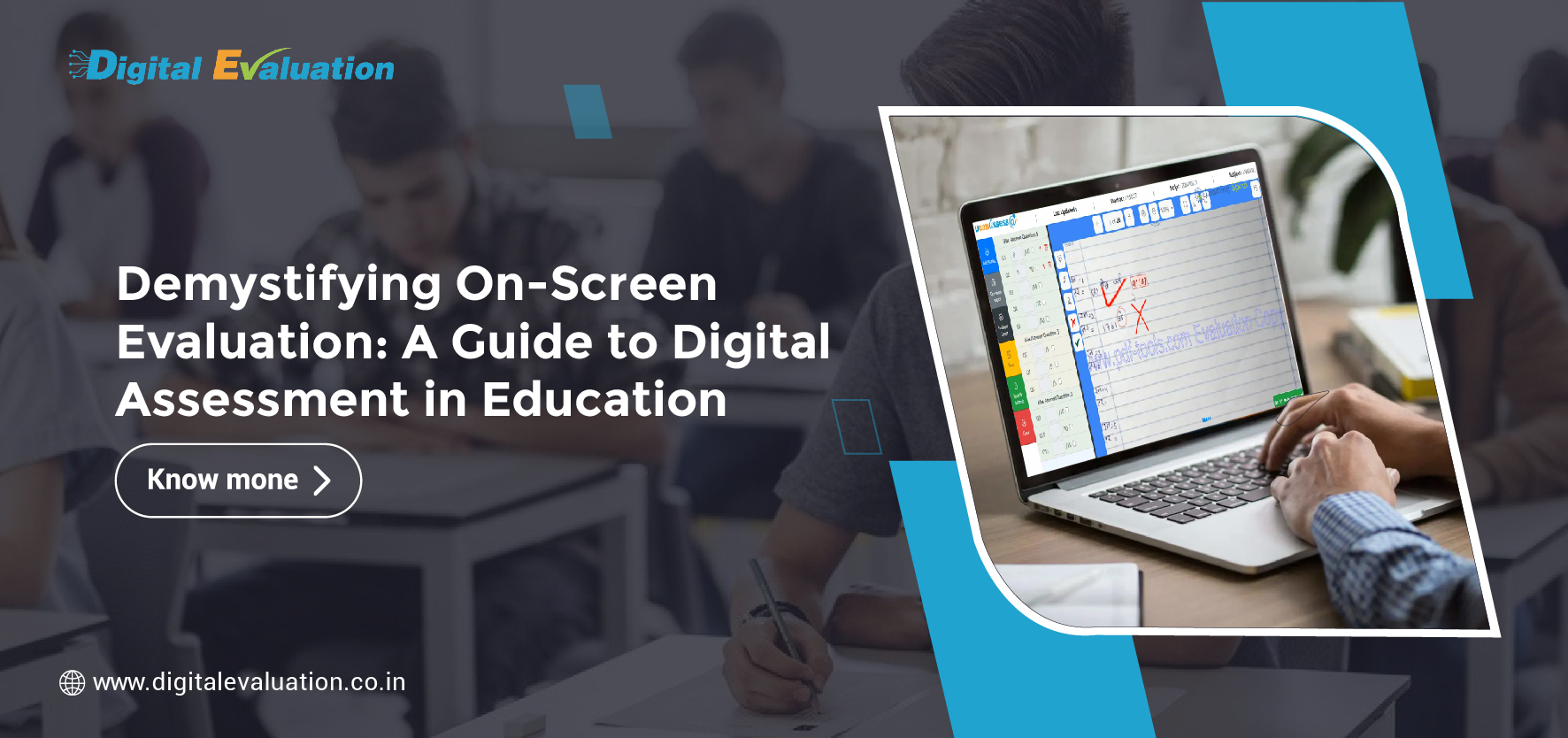
Digital evaluation — also referred to as on-screen evaluation or on-screen marking — is the process of scanning physical answer booklets, uploading them onto a secure digital platform, and enabling evaluators to assess student responses remotely on their screens.
Rather than handling physical scripts, examiners log in to a centralized system, review answer images, apply marks using structured digital tools, and submit assessments — all without leaving their location. Results are compiled automatically, reducing manual data entry errors and accelerating post-examination processing significantly.
Key Benefits of Digital Evaluation for Universities
1. Faster Result Processing Traditional evaluation cycles take weeks. With a digital evaluation system, answer booklets are scanned, distributed, and assessed in parallel across multiple evaluators simultaneously — compressing timelines from weeks to days.
2. Greater Accuracy and Fairness Paper-based marking is vulnerable to human error during totaling, transcription, and record-keeping. Digital platforms automate mark aggregation, flag inconsistencies, and enforce structured marking schemes — delivering fairer outcomes for students.
3. Remote and Distributed Evaluation Evaluators no longer need to travel or be physically present at a single location. On-screen marking systems allow faculty to assess scripts securely from any authorized device, reducing logistical costs and expanding the pool of available examiners.
4. Complete Audit Trail and Transparency Every action on a digital platform — from script access to mark submission — is logged. This creates a full, verifiable audit trail that supports revaluation requests, grievance resolution, and institutional accountability.
5. Seamless Integration with Examination Workflows A well-designed system connects directly with pre-examination processing, question bank management, and post-examination processing — creating a unified pipeline from paper setting to result declaration without manual handoffs.
Challenges Digital Evaluation Solves
Universities adopting digital evaluation often report that their biggest pain points were not academic — they were operational:
- Scanning of answer sheets at scale without data loss or quality degradation
- Secure distribution of scanned scripts to the right evaluators
- Preventing double-marking or unmarked sections from slipping through
- Coordinating marks across departments for centralized result compilation
- Managing revaluation workflows transparently and on time
A purpose-built on-screen marking system addresses each of these systematically, replacing ad hoc paper processes with structured, automated workflows.
Where the Industry Is Heading
The next phase of digital evaluation is not just digitization — it is intelligence. Institutions are beginning to explore:
- AI-assisted marking support that flags outlier scores and suggests marking consistency reviews
- Real-time dashboards for examination controllers to monitor evaluation progress live
- Mobile-compatible evaluation interfaces that allow flexibility without compromising security
- Deeper integration between the online examination system, answer booklet scanning, and automated result publishing
The universities that invest in this infrastructure now will be better positioned to scale, adapt, and maintain academic integrity as examination volumes grow.
How Learning Spiral Supports This Transition
Learning Spiral provides a comprehensive suite of examination technology solutions designed specifically for universities, education boards, and autonomous institutions. From answer booklet scanning and on-screen evaluation to question bank management and full university examination system automation, every module is built to work together — reducing dependency on manual processes at every stage.
Institutions that have adopted Learning Spiral’s platform report measurable improvements in result turnaround times, evaluator coordination, and student satisfaction — not as a side effect, but as a direct outcome of better-designed workflows.
The Shift Is Already Underway
Across India and internationally, examination authorities are moving away from paper-based assessment infrastructure. The institutions leading this shift are not doing so reactively — they are choosing digital evaluation proactively, as a strategic investment in examination quality, operational efficiency, and institutional credibility.
The question for every university is no longer whether to adopt digital evaluation. It is how soon — and with whom.
Ready to modernize your examination process? Explore Learning Spiral’s full range of digital evaluation and on-screen marking solutions, or request a personalized demo for your institution.